What Dr. Ian Kelson can teach us about person-centered therapy
28 Years Later: The Bone Temple
FILM THERAPY
Jessica Younger
4/22/20264 min read
Earlier this year I was excited to visit one of my favourite places - the cinema - to see 28 Years Later: The Bone Temple.
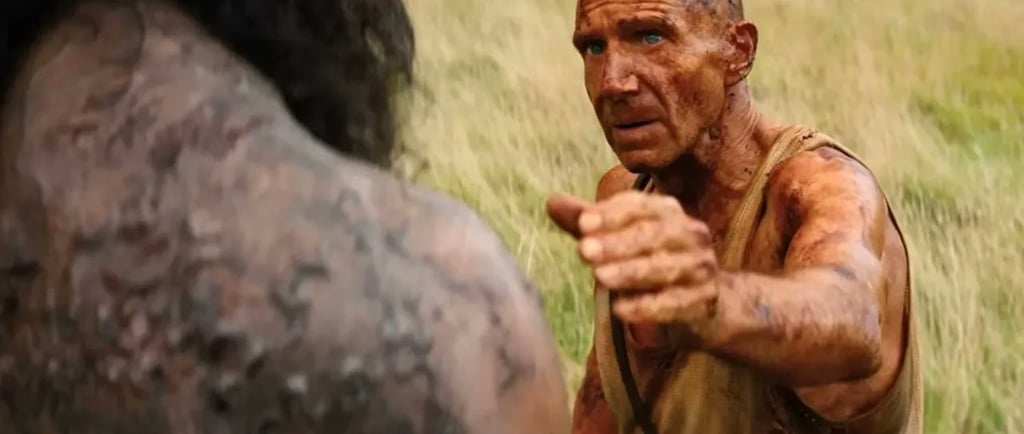
I’m a long time fan of the franchise; not just for the excitement of a post-apocalyptic, adrenaline fuelled zombie flick, but for its powerful themes and philosophical messaging. So, when watching the new film, I found my therapy ear was twitching excitedly when watching Ralph Fiennes’ character, Dr Ian Kelson.
Dr Kelson is a medical doctor who, 28 years after the outbreak of the virus, spends his days creating and maintaining an ossuary; the “bone temple”. As he describes in 28 Years Later, (2025):
“Every skull is a set of thoughts. These sockets saw and these jaws spoke and swallowed. This is a monument to them.”
What is striking is his capacity for compassion in a world that has been, for almost three decades, a place to survive - avoid the infected, get by with what you can, and hope that it is enough to survive day to day. He does more than survive; he dedicates his time to nuture, care for, and attend to the dead; quietly acknowledging the individual lives that were lived. It’s a gesture that I find deeply human and moving.
He extends this compassion to the infected. To most (and understandably), the infected are a threat to their survival, and are therefore avoided, or killed (if said character is able to avoid being attacked and infected themselves). However, to Dr Kelson, the infected seem to be no different in his eyes to any other survivor. They are a threat, yes, but one that he treats with curiosity, and a conviction to help where he can. Kelson extends this compassion to Samson, a goliath of a man, long infected with the virus. What is so beautiful to watch is in the soft moments; as they sit together in quiet companionship, Kelson seems certain of humanity still within Samson. He observes peacefulness when he sedates him, quietening the rage inflicted on him by the virus, offering:
“Nothing wrong with peace and respite, Samson.”
This is validation. Just as a person-centered therapist would strive to, he puts judgement aside, making room to see and acknowledge Samson’s pain.
Kelson offers Samson, whether he understands it or not, one of the cornerstones of person-centered philosophy; unconditional positive regard. He does not judge or criticise Samson for what he has become. He observes his reality. He beholds how Samson experiences the world. Samson does not need to earn Kelson’s approval; he simply is, as he is.
A scene that really caught my attention was between Kelson and Sir Jimmy Crystal; the films’ villain. At the point of their meeting, Jimmy is not known to Kelson. He regards Jimmy quietly, listening to him, and building a picture of his understanding without an ounce of judgement; he simply regards him as he is. He acknowledges the differences in their beliefs - Kelson’s in science and Jimmy’s in Satanism - from a place of neutrality, not of fear, superiority or a need to be right. Kelson isn’t condoning Jimmy; he is merely, from a neutral place, acknowledging their differences.
Jimmy picks up on this way of being. “I like you, you’re easy to talk to”.
Suddenly, we see an entirely different side of Jimmy. He becomes reflective, opening up about his father and the voices he hears in his head. As he listens, Kelson quietly, just as he does with Samson, affirms all of the cornerstones of the person centred approach. He tries to listen without judgement. He offers empathy. He receives Jimmy as he is, without expectation. He’s responsive to what he hears, not what he thinks he already knows. And what is created is a space which Jimmy may well have never encountered in his life; someone who does not fear him, but regards him simply as he is. There’s a sense of equality, a lack of expectation.
An important part of the person-centered approach is the belief that the therapist is not the expert in the relationship; the foundation lies in an equal and collaborative relationship, driven by the client as the “expert” in their own life.
Perhaps in this case, being met with someone who did not offer superiority, momentarily allowed Jimmy to drop the mask, reign in the facade, and let go of his own need to be superior. He softly corrects Kelson about his name; “Actually, it’s Sir Lord Jimmy Crystal. But no, you’re good. Jimmy’s fine.” This was, for me, a profound moment of human connection between two vastly different characters. This is followed by Jimmy candidly revealing his truth; the violence he will act on if Kelson does not do as Jimmy asks.
And as jarring as this is, it makes me wonder; did Jimmy put the mask back on? Or, does he reveal his plan simply because he is being given permission to show his full authentity?
Kelson’s philosophy on life seems to be perfectly encapsulated by his attitude to the virus; viewing the infected as those afflicted and in need of treatment, not as monsters. As he says in the previous film, 28 Years Later (2025):
“There are so many dead. Infected and non-infected alike. Because they are alike.”
I think it is this unwavering respect for life, and his belief in every living things right to life, that I find so moving.
Perhaps his compassion is a factor in Samson’s recovery. Perhaps his way of being offered a momentary feeling of being heard and truly seen for Jimmy - not matter what that truth looked like.
He’s a great example that for person-centered therapists, the foundations of our work aren’t just tools that we use in the room; they’re a philosophy that inhabits not just our work, but the way we live our lives.
And so as a character, I can’t help but wonder what Rogers, the father of person centered therapy, would have made of him!